Showing posts with label Book Reviews. Show all posts

Saturday, November 22, 2014

The Shallows

I recently spent a week attending some classes for my master's program at the Portland, OR campus of George Fox University. Since I went to high school in Lake Oswego and spent my early married years in the same area, I was in my own stomping grounds. I had a GPS with me, but after a couple of days it malfunctioned, and I quickly realized that I actually had no need for the device. I was in familiar territory, able to navigate from the recesses of my own memory, even though I hadn't lived in the area for over 15 years. 

Fast forward one month. David had gone to Paris for the day, and when he returned I had to pick him up from a nearby train station. The station is in the town of Amboise, about 20 minutes from Loches. Though I've been there many times, I would've been completely lost without my GPS. We've lived in the same house for 3 years now, and the only place I drive without the GPS is the local grocery store. 

Granted, I do a lot less driving overall in France in that I did in the States. But still, the difference in my ability to navigate here is a little disconcerting. I've never HAD to get around in France without a GPS, and as a result, I have become entirely dependent upon it. Which kind of makes me feel like I'm getting dumber. And then I remember that I've learned a new language in that same time frame, so maybe I shouldn't reduce my intelligence to my capacity for navigation.


Nevertheless, the experience got me thinking about the effects of modern technological advances on the workings of the human brain. I've been reading a book on the subject, and frankly, I find the research to 1.) Accurately reflect my experience and 2.) Prove that the dangers are real.


In his book, The Shallows: What the Internet Is Doing to Our Brains, Nicholas Carr explains how different technological advances have changed not only how humans interact with the world and each other, but how our interaction with technology can actually change us. For example, consider how the invention of the clock changed human behavior. Carr writes, "In deciding when to eat, to work, to sleep, to wake up, we stopped listening to our senses and started obeying the clock. We became a lot more scientific, but we became a bit more mechanical as well."

Looking back through history, how humans have stored and shared knowledge has evolved with technological advances. Originally knowledge was passed on orally. Eventually writing was invented, and a few elite members of society were given the privilege of learning to read and write. Scrolls or tablets belonged to either very wealthy people or they were communal property, stored in places such as churches or monasteries. For reasons of limited access and limited education, reading was a public activity, always done orally so that many could benefit.

It wasn't until the invention of the printing press in 1439 that books became both portable and inexpensive, thereby giving access to the masses. That technological advance was so significant that many scholars were skeptical. They believed that such indiscriminate access to information could have a negative effect on society as a whole. 

The printing press didn’t just change WHO could read and WHAT could be read, it changed HOW humans engaged in the act of reading. Instead of being a public activity, for the first time in history, reading became a personal and private activity. People were more reflective, contemplative, and engaged in the information that was available to them.

The printing press also changed how people wrote. Not only did written structure become more concise and less repetitive, people were willing to write different things. There are some things that one might not dare to read aloud around a campfire, but would delight to read at home alone. Thus, the reason for the lament over the ills of the printing press.

Fast forward 550 years. Passing by inventions such as radio and television, we arrive at the age of the Internet. Like books, radio and TV are one-way media--information can only flow in one direction. The Internet changed not only how we are sharing knowledge, but made knowledge sharing bi-directional--or rather multi-directional as many can interact with the same subject simultaneously. 

While reading books is a slow, linear process, reading on the Internet has become multi-dimensional, with links offering unlimited distractions. In fact, the Net is essentially one long stream of distractions. And while all of that input and information is stimulating, it is changing the way humans work and think. Here are just a few of the shocking conclusions that Carr draws from results of numerous research endeavors:
"The Net's cacophony of stimuli short-circuits both conscious and unconscious thought, preventing our minds from thinking either deeply or creatively." 
"In reading online, Maryanne Wolf says, we sacrifice the facility that makes deep reading possible. We revert to being 'mere decoders of information.' Our ability to make the rich mental connections that form when we read deeply and without distraction remains largely disengaged." 
"We willingly accept the loss of concentration and focus, the division of our attention and the fragmentation of our thoughts, in return for the wealth of compelling or at least diverting information we receive. Tuning out is not an option many of us would consider."
Attentiveness, memorization, and deep thinking are becoming lost arts--and their loss has critical implications for our ability to be creative and innovative. But it is not only our intellect that suffers. It turns out that our ability to show empathy and compassion is also diminished by distractions. 

So The Shallows has me rethinking not only how much time I spend online, but how I spend that time. I find that I can hardly sit through an entire movie at home without checking email, playing Words with Friends, or browsing Facebook. The distractions don't have to come looking for me, I go looking for them. And now that I know that such behavior is actually re-wiring my brain, I'm concerned. And I plan to do something about it. 

Sunday, January 5, 2014

Top Picks from My 2013 Reading List


Okay fellow literature lovers, of the 39 books that I read in 2013, here are a few that topped my list

In the spirit of sharing, please oh please let me know what your favorite reads were. I am particularly in need of good fiction references!

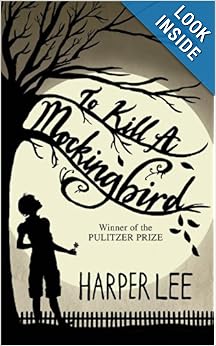
Best Classic: To Kill a Mockingbird, by Harper Lee


Graham had to read this for his American Literature class, and since I hadn't read it since high school, I decided to give it a gander. The truth is, I think I loved it even more as an adult than I did as a youth. As a Literature Major in college, I have read most of the classics, but I try to reread a few of them every year, and I am never disappointed. What classics did you discover or revisit this year?

Favorite New Author: Tom Hilpert

Earlier this year I made a Facebook plea for suggestions of good fiction, and an old friend of David's family (a woman I also know and love) suggested her son's books. While I love Sharyn and Ted Hilpert, and I had met their son Tom years ago, I was hesitant. It's  hard to believe that a mother might be objective about her own son's writing. Nevertheless, I decided to give it a shot. After all, Superior Justice was only $3.99 on Kindle, so what did I have to lose? Much to my delight, I absolutely LOVED Tom's writing. He is funny, he creates great characters, and he tells a good story to boot! I quickly bought the sequel, Superior Storm, and found it just as pleasing. The third in this mystery series, Superior Secrets, came out two months ago, and I just downloaded it today. Have you discovered any good new authors this year?

Book that has had the biggest impact on my ministry: Miracle Work, by Jordan Seng


My mother-in-law sent me this book, seemingly out of the blue. What she did not know was that God has been calling me to a deliverance ministry in France, and I had been fighting God about it. I just don't like dealing with demons and find life to be more pleasant when I can ignore the reality of their pitiful existence. This book, whose sub-title is A Down-to-Earth Guide to Supernatural Ministries, is a practical manual, a heartwarming memoir, and a challenging call to action all rolled up in one. It was exactly the encouragement that I needed for the unexpected ministry that God has given me. What book did God use to bolster your ministry this year?  

Most Inspiring: Jesus Feminist, by Sarah Bessey


Jesus Feminist was like a tall glass of water. It was refreshing, invigorating, and downright necessary. Bessey is first and foremost a lover of Jesus. It is her passion for her savior that shapes and defines her worldview as a feminist. I have never read anything like it. She is not angry, she is not bitter, and she is not anti-men. She is honest and hopeful and intelligent. As I am trying to find my place as a Christian Woman Leader, this book inspired and empowered me. 

Most Life-Changing: Godly Servants, by David Teague


Godly Servants spoke to a deep void in my life. I was in danger of replacing my relationship with God with my ministry for God. The two are not interchangeable. This book woke me up and helped me re-prioritize my life so that my work for God now flows out of a rich and satisfying love relationship with God. After reading Teague's book, I began Brian Rice's Spiritual Exercises, which have helped me learn to invest daily in my own spiritual formation. I am so thankful for these resources that are helping me to  rediscover my First Love. What book pointed you back to the essential truths in life?

Monday, September 2, 2013

Epic Grace Giveaway


If you follow me on Twitter or if you are my Facebook friend, then you have surely noticed the great quotes that I posted throughout the month of August. Those quotes came from the JUST RELEASED book Epic Grace, by Kurt Bubna. Kurt is a pastor in Spokane and his church is one of the churches that supports our ministry here in France. Beyond that, Kurt is an inspiring friend and I consider his wife, Laura a mentor. (God is the hero of Epic Grace, but Laura is His ever-faithful sidekick--a heroine extraordinaire!)

Because I had the privilege of serving on the Pre-Release Team for Epic Grace, I was given an advance copy to read. Here's what I loved about this book:
  • Kurt's Heart. Kurt writes with transparency and conveys a genuine hopefulness for his reader. He shares some pretty candid stories with a desire to 1.) extol God's goodness and 2.) encourage the broken. Since I know him in real life, I can tell you that this guy is the real deal. He means every word, and if he could say it to your face the only thing that would change is that you might get a hug thrown into the mix. Actually, reading the book is kind of like getting a hug from Pastor Kurt.
  • Kurt's Humility. Even though he's super smart, incredibly talented, and just plain cool, Kurt writes like he's an ordinary guy. He tells it like it is. His stories are not sanitized. He doesn't save face. At the same time, there is no sense of failure or defeat. Why? Because God is the ever-capable hero of every episode of Kurt's life. His mistakes are drowned in God's grace, a grace that spills off of every page, and douses the reader. 
  • Kurt's Humor. I giggled without guilt. Kurt has a funny way of failing. It's funny because I can relate. I see myself mirrored in his missteps, and when I laugh at him I'm really laughing at me. There's freedom in finding the humor in our lives, and in that way, Epic Grace is liberating.
So having been blessed by this book, I'd like to share it with you! I am going to give away TWO copies of Epic Grace--one digital and one hard copy. To be a happy recipient, simply reply or leave a comment about GRACE and let me know how you would prefer to read the book (digital? or hard copy?) At the end of the week, I'll choose my 2 favorite comments as winners.

Wednesday, March 6, 2013

Are you buying it?

As we waited in various airports over the past few weeks, I spent a lot of time perusing book tables. Despite my seeming addiction to literature, I was feeling rather illiterate. Years ago, I would have been familiar with just about any title available at the airport. Surprisingly, I was hard pressed to find anything I recognized, save the names of a few select authors.

I particularly noted the number of memoirs that were displayed. Over the past two years I have been reading a great number of memoirs, but I thought this was a personal preference thing; I did not realize that it was a new trend. The memoirs that I read are (most often) written by Christians, and they are steeped with the redemptive power of Jesus. The memoirs that I picked up in the airport bookstores were starkly different.

While the endorsements proclaimed certain works to be "bravely self-revealing," I found the parts that I skimmed to be tragically disturbing. What good is authenticity if it fails to point us to our desperate need for a Savior? How can people come to terms with their own depravity and be satisfied? Or worse, pleased? And why would any reader wish to read disgusting self-disclosures when redemption never comes?

I suppose this is reality-television for the avid reader, but I am as turned-off by it as I am by shows like The Bachelor. The sad thing is, these works would not be so prevalent if they were not popular. People are buying this stuff. Reading it. Watching it. Giving it room in their lives and access to their souls. I am shocked, not so much by the sin that is exposed; but rather, by the fascination that we, as a culture, have with it. At the glorification that we give to it. At the prominence that we accord it.

Oh Jesus, I thank you for dying on the cross for all that is wretched and unholy! I thank you because your grace makes salvation possible. I thank you because you can redeem anything. Won't you free us from a morbid obsession with our own depravity and make us hungry for your holiness?

p.s. If you are looking for a good memoir, may I suggest Surprised by Oxford, by Carolyn Weber; Digging Ditches, by Helen Roseveare; or The Holocaust Diaries, by Nonna Bannister? In these rich stories, fallen people are called out of darkness and discover what it means to live in the light.

Have you read a good memoir? Tell me about it!

Wednesday, January 7, 2009

Small World Wide Web

The other day I received the nicest e-mail from a woman I have never met. I asked her permission to share it, and she graciously agreed, so here is an excerpt:

I am Christy Martin in Jacksonville Florida. Your website/blog was picked up by Random House and forwarded to us because you recommend my husband Charles' books on your reading list. I happened to see it and had such a laugh as I have just learned to knit as well. It is rather addicting isn't it? I'm currently working on two scarves....

We are always grateful to anyone who spreads the word about Charles' books and do hope you have enjoyed them. Best to you and yours and May the Lord Richly Bless, Protect and Guide You in 2009.

How amazingly cool is that? I have read three books by Charles Martin, and I look forward to reading many more. He writes beautifully crafted stories that are poignant, peppered with humor, and filled with refreshingly candid characters. Martin has (in my humble opinion) the VERY rare ability to infuse faith in God into a story without making it seem trite or sugary sweet.
If you haven't read any of his books, I would highly recommend checking them out. My favorite so far is The Dead Don't Dance, and the next one I plan on reading is called When Crickets Cry. Happy reading! And please let me know what you think if you do read any of his books. I'm always up for a good chat about literature.

Tuesday, July 8, 2008

Secret Fears

Okay, its confession time. I like to think of myself as a brave and adventurous woman, but I harbor a secret fear. I am afraid to check out a book from the library if I am not familiar with the author or if it has not been recommended by a friend. I am scared I will wind up with a loser book, and due to my "finish what you begin" upbringing I will dutifully read the whole torturous tome. But I believe that God wants me to overcome my fears; so, to that end, I have decided to choose at least one "unrecommended book by an unknown author" each time I go to the library this summer. Yeah. You said it. Jenn is LIVING ON THE EDGE, BABY!!! Up until last week, I hadn't checked out any total loser books, but I hadn't found anything great either. Then I checked out Home to Harmony by Philip Gulley, and found myself asking, "Why hasn't anyone told me about this book?!?" It was pure delight in a dust cover.
The author is a Quaker minister, and he writes about a fictional Quaker minister in a small town in the Midwest. The book is completely wholesome and clean without being tedious or "churchy." And in chapter 8 I laughed so hard that my family thought I was going to hyperventilate. If anyone has ever served on a church committee in any capacity, you will fully appreciate chapter 8, where Gulley writes about the Elder Committee at the church in Harmony:
  • "If we accidentally appoint a saint to the elder's committee, by midyear we have broken them of all Christlike tendencies."

Can you relate??? As an added bonus, there was actually a mention of my nephew's Indiana college, Earlham, in the story. The best part? This is the first of a series. The worst part? Tomorrow, when I go to the library, I can no longer classify Philip Gulley as an "unknown" author, so I will have to be brave once again!

 
SITE DESIGN BY DESIGNER BLOGS